MenuClose
How far does a Gończy Polski hunt? Search range, returning and handler connection
How far a Gończy Polski searches depends on the individual dog and the situation. With my own dogs, I have often observed a radius of around 300 to 500 metres and a return within roughly 30 minutes. These are personal observations, not fixed breed traits. Here I explain how independent searching, returning and the bond with the handler fit together in our experience.
Lucas Müller · Personal experience from breeding and hunting
In this article
What I can say about search range
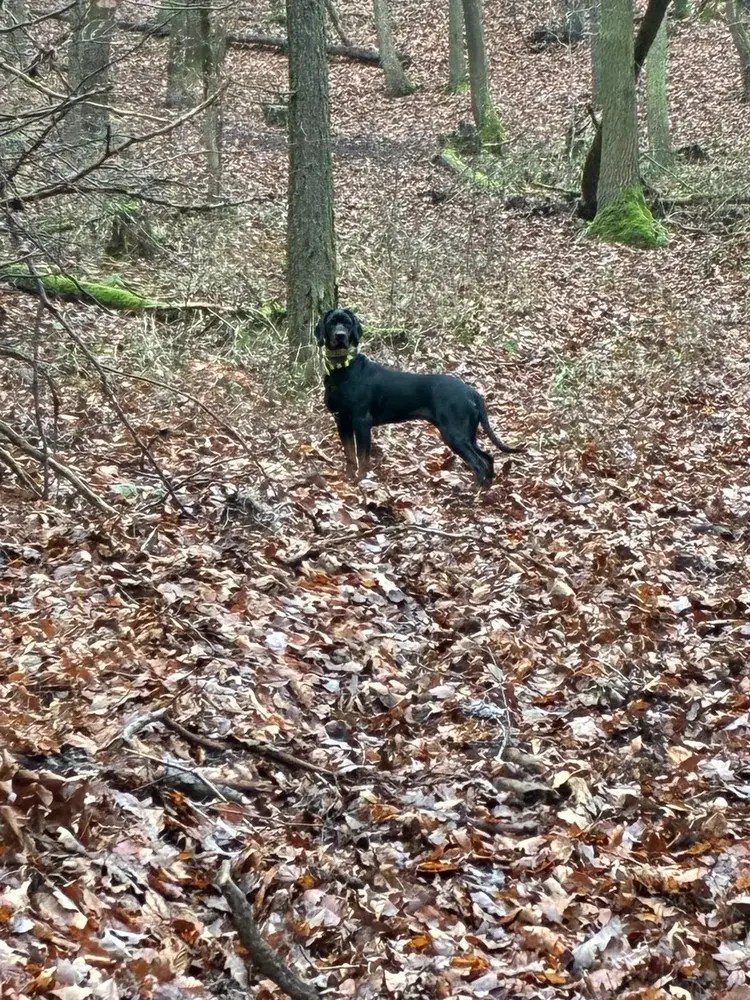
With my own dogs, I have often observed a search radius of roughly 300 to 500 metres. On those outings they generally returned to me within about 30 minutes, checked in and then continued searching. I value precisely that combination of independent work and renewed contact.
These figures describe my observations and do not apply to every Gończy Polski. Encounters with game, terrain, experience and the individual dog can all change what happens. Knowing my dog and how it works matters more to me than expecting a fixed distance or return time.
Moving through the ground together
When I move through the ground with them, I often find my dogs even more motivated. We are out together, and to me it feels very much like teamwork. The dog searches independently while I also move through the hunting area.
It teaches me a great deal about the way the dog works. Where does it take its time? When does it become more purposeful? How does it reconnect with me? These shared experiences help me understand the dog better. Its independence and continued connection with me interest me more than the greatest possible distance.
Learning to read the dog
As our shared experience grows, I develop a sense of whether my dog is working on something interesting or searching without a clear lead. Its attention, pace and use of its nose provide clues. When little seems to be happening, I also see it use its energy more sparingly.
These observations help a handler get to know their own dog better. To me, that is the value of shared experience on hunting ground: over time, it becomes easier to interpret the dog’s behaviour and follow its search with greater understanding.
Connection grows through everyday life
For me, the relationship with my dogs develops well beyond hunting. It grows through living together, everyday routines and everything we experience together. The dog gets to know me, while I learn how it responds to different situations.
That familiarity provides an important foundation for training. Independent hunting work and a good connection with the handler need to develop alongside each other. To me, they belong together. I explain how I build on that foundation in my guide to training from puppyhood to the first hunting test.
Practising returns and recall early
I start building a positive association with returning to me while the dog is young. My recall cues are “Hier” or “Hierher”, and I reward the dog for coming back. At first, the dog needs to understand what I am asking in straightforward conditions.
Checking in voluntarily during a search and responding to a recall cue are two different things. Recall can become difficult when a dog is in direct contact with game. Reliable responses in the garden do not prove that the same response will follow in every hunting situation. I explain cues and rewards in more detail in my guide to Gończy Polski recall training.
What this means for prospective puppy owners
Anyone hoping to work one of my puppies as a hunting dog should enjoy the process of developing together. Suitable ground for practice, time and a willingness to get to know the individual dog are all valuable.
I also recommend a dog tracking device. It can help keep track of the dog’s location and make it easier to investigate when something is unclear. When a dog is working independently, I consider that additional information useful.
Contact
Would you like to discuss whether this way of working suits your hunting ground and plans? Tell me how you would like to work with your future dog.



Breeding Gończy Polski for hunting performance since 2019 – shaped by practical hunting experience, family life and a commitment to breeding healthy hunting dogs with sound temperaments.
Breeding within the VDH · Kennel name internationally protected through the FCI
© 2026 Gończy Polski vom Pauelsgraben

