MenuClose
Training a Gończy Polski: From coming home to the first hunting test
How do I start training a Gończy Polski? First, I let the puppy settle into its new home and give us time to get to know each other. Short exercises, recall and later preparation for a suitable hunting test build on that foundation. Here I explain how I set goals, allow breaks and adapt the next steps to the individual dog.
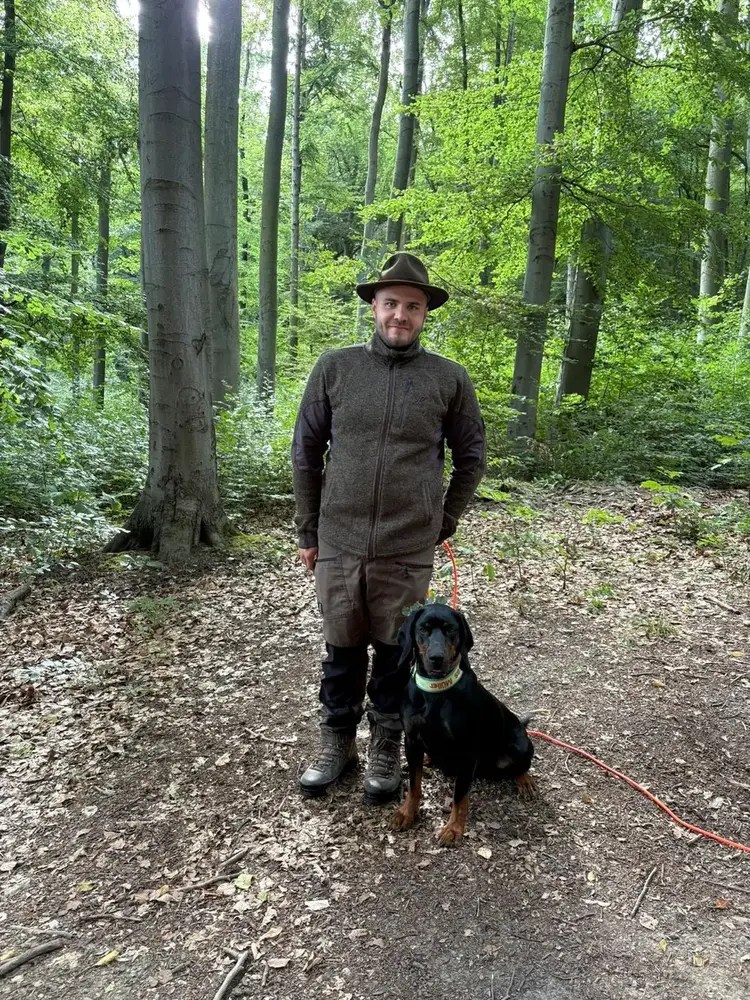
Lucas Müller · Personal experience from breeding and hunting
In this article
First, let the puppy settle in
A new home brings many unfamiliar impressions for a puppy: different surroundings, new people and a changed daily routine. I consider it important to allow time to settle in first. Every spare moment does not need to be filled with a training exercise.
At the same time, we begin getting to know each other. How does the dog respond to something new? When is it curious, and when does it need rest? Paying attention now creates a sound basis for working together later. Initially, familiarity matters more to me than getting as much as possible right.
Goals provide direction, without rigid deadlines
I find it useful to set goals and small milestones. What kind of hunting work do I want to do with my dog, and what must it learn along the way? A plan helps me organise my time and build exercises in a sensible sequence.
These milestones must suit the individual dog. To me, a target date is an opportunity to assess training progress, not a reason to force a result. If something is not working yet, the next step becomes smaller or gets more time. In my view, a rigid timetable does not account for a puppy’s individual development.
Short sessions with a positive finish
In training, less is often more. Once the dog has completed a task well, that success can also mark the end of the exercise. I do not need to immediately check whether it works just as well a second or third time.
When things are not going well, interest can fade quickly. Continuing indefinitely rarely helps. Taking a break and trying again another time is often the better choice. I want the dog to enjoy working with me, without both of us becoming impatient.
Build recall and basic skills step by step
It is natural to want to make progress, especially with hunting training. Even so, the basics deserve care. Recall is one example: I start early with “Hier” or “Hierher” and reward the dog for coming to me. It first needs to understand the task in straightforward conditions.
The same principle applies to other exercises: the next step should build on something the dog can already do well. The individual dog’s development is what matters. What another dog has already learned tells me little about the right task for mine today. For practical examples, read my guides to building recall and starting blood-tracking training.
Learn from experienced handlers
Other handlers’ experience can be very helpful. Someone who has trained a range of dogs may notice something I have missed. Looking at an exercise together can therefore achieve more than many further repetitions alone.
I would be open about what is working and where I am getting stuck. Training is not a race to finish first. For aspiring hunting-dog handlers, finding experienced guidance early and having someone to ask questions can be particularly valuable.
A hunting test is one goal along the way
Anyone working towards a particular test should understand its requirements and prepare accordingly. The right test also depends on the work the dog is intended to do. I would break the preparation down into manageable tasks.
For me, the most important thing remains making real time for training. Good ground to practise on is a considerable help, but it cannot replace that time. Ultimately, I want a dog whose partnership with me has grown through everyday life and hunting. Our shared development continues after a test as well. My overview of hunting dog tests for the Gończy Polski explains the different tests and the work they assess.
Contact
Are you a hunter, or training to become one, and thinking about working a Gończy Polski? We can discuss the time and opportunities you have available for training.



Breeding Gończy Polski for hunting performance since 2019 – shaped by practical hunting experience, family life and a commitment to breeding healthy hunting dogs with sound temperaments.
Breeding within the VDH · Kennel name internationally protected through the FCI
© 2026 Gończy Polski vom Pauelsgraben

