MenuClose
BREED KNOWLEDGE · HUNTING DOG
Gończy Polski: temperament and care
To me, the Gończy Polski, or Polish Hunting Dog, is first and foremost a true working hunting dog. It combines a keen nose and a strong drive to find game with agility, voice and a remarkably close bond with its handler. That combination has fascinated me from the very beginning.
Would a Gończy Polski suit your hunting life and your family? I bring together the official FCI standard and my own experience: how the Gończy works, what it needs, and what its care and training involve.
FCI Group 6 · Scent hound · Subject to a working test · Origin: Poland
FCI STANDARD NO. 354
The breed at a glance
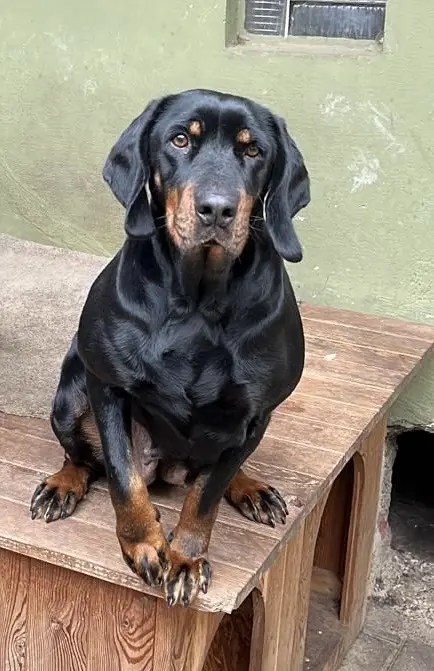
The Gończy Polski is a distinct Polish hunting dog breed. The current FCI Standard No. 354 was published on 7 November 2017. It places the breed among the medium-sized scent hounds in FCI Group 6 and expressly lists it as subject to a working test.
Standard & origins
- Origin: Poland
- FCI: Group 6, Section 1.2
- Classification: medium-sized scent hound
- Use: hunting dog
Build & size
- Proportions: rectangular, approximately 9:10
- Males: 55–59 cm
- Females: 50–55 cm
- Bone: strong but not heavy
Work & temperament
- Game: primarily wild boar and red deer
- Temperament: stable, gentle, courageous, intelligent
- Strangers: rather reserved
- Voice when hunting: distinctive and melodious
Teeth, coat and colours
The standard calls for a scissor bite; full dentition is preferred. The coat is harsh, dense and close-fitting, with a plentiful undercoat. Permitted colours are black and tan, brown or chocolate and tan, and red. Small white markings on the toes and chest are allowed.
ORIGINS AND DEVELOPMENT
A hunting breed with deep Polish roots
The history of the Gończy Polski is closely tied to Poland’s extensive forests and the hunting of hoofed game. The FCI standard cites written references to hunting with such dogs as early as the early 13th century. By the 17th century, different types of hunting dog were established in Poland.
13th–17th centuries
Hunting with scent hounds and blood-tracking dogs has a long tradition in Poland. The vast forests and abundant hoofed game shaped dogs that needed to work reliably even in difficult terrain.
19th century
Jan Szytier described Polish hunting dogs in 1819; W. Kozlowski followed in 1821 with a description of two types. Ignacy Bogatynski’s detailed accounts from 1823–1825 already offered an early basis for a breed description.
20th century
After the First World War, the lighter Polish type remained in hunting use, particularly in the east and in mountainous, hard-to-reach regions. Józef Pawuslewicz worked with these dogs, influenced their further breeding and wrote an early breed standard.
A build with a purpose
The standard describes an agile, compact dog with strong but not heavy bone. This suits its original task: working with endurance, moving confidently through dense cover and difficult terrain, and remaining agile. A deep chest, well-muscled limbs, firm feet and a flowing, energetic gait are therefore more than matters of appearance: they contribute to the dog’s ability to work.
HUNTING IN PRACTICE
How a Gończy Polski works
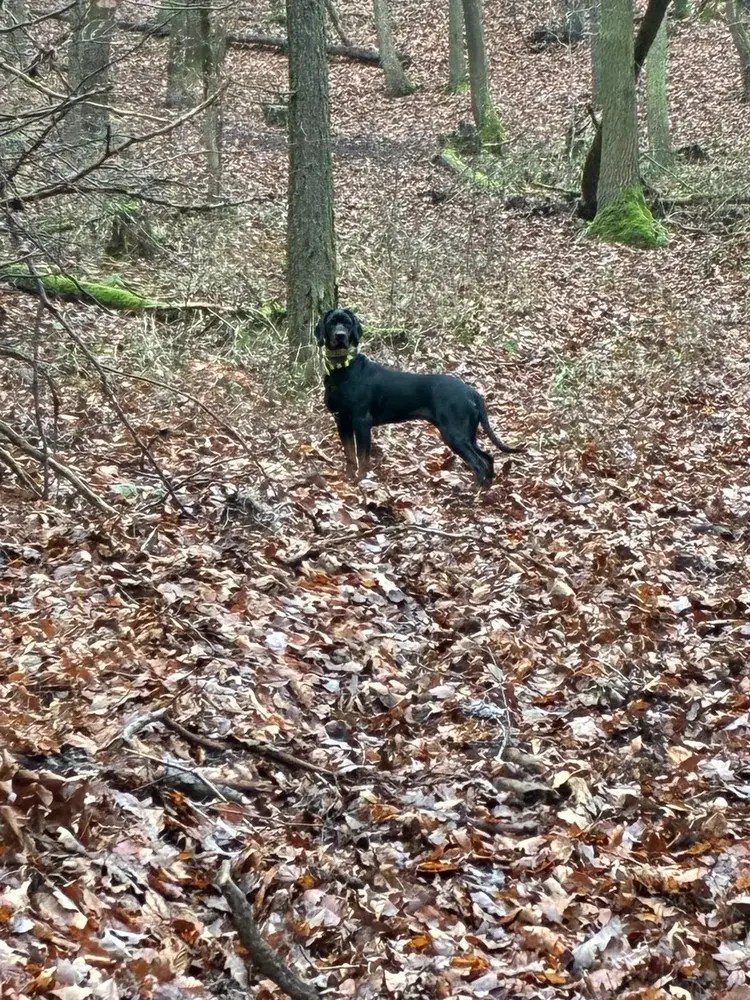
The FCI standard names wild boar and red deer as the breed’s main traditional quarry. For me, though, understanding the breed means looking beyond the game species to how it works: searching, finding, following a trail, giving voice while hunting and, despite the independence the work demands, re-establishing contact with the handler.
Scenting ability & drive to find game
A good dog working through cover should not wait to be shown game. It needs to enter likely holding areas, search independently and find game. That resourcefulness and determination to keep a trail going also play a central role in scent-hound tests.
Giving voice is part of the work
Giving voice does not simply mean that a dog barks a lot. It means vocalising while working game or following its scent or trail. Hunting with voice is a central working trait of scent hounds. It lets the hunter hear how the hunt is progressing and has particular importance in the AP, GP and VStP tests.
Independent, yet connected to the handler
A Gończy needs to make decisions in cover, even when its handler cannot see it. In practice, it is equally important that the dog re-establishes contact after its work. To me, independence and a bond with the handler are complementary qualities of a good hunting dog. I describe my experience of search range, returning and the bond with the handler in a separate article.
Dense cover & wild boar
The compact, agile build helps the dog where cover is thick and terrain is difficult to read. Courage is desirable; uncontrolled aggression is not. I value a dog that works sensibly, avoids putting itself at unnecessary risk and still has plenty of hunting passion.
What about blood tracking?
Gończy Polski can also work very well on the trail of wounded game. A VSwP or VFsP records demanding work on an artificial trail and the cooperation between dog and handler. That does not mean every Gończy is automatically a fully trained dog for tracking wounded game: experience, training and real work remain essential. My guide to blood tracking with the Gończy Polski explains how I build the foundations.
Tests demonstrate ability – they do not replace hunting experience
AP, GP, VStP and VSwP give me valuable, verifiable information about a dog. Only regular hunting work, however, reveals how it handles different game, difficult cover, exertion and unfamiliar situations. Both belong together in my breeding.
Independent in the hunting grounds, close to the family at home
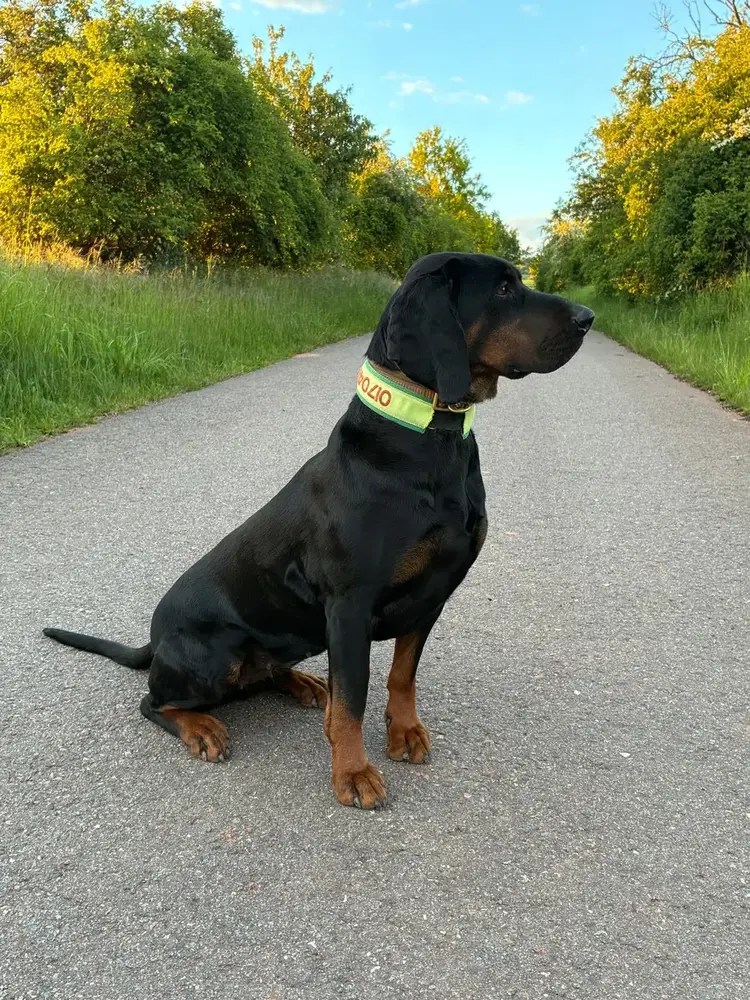
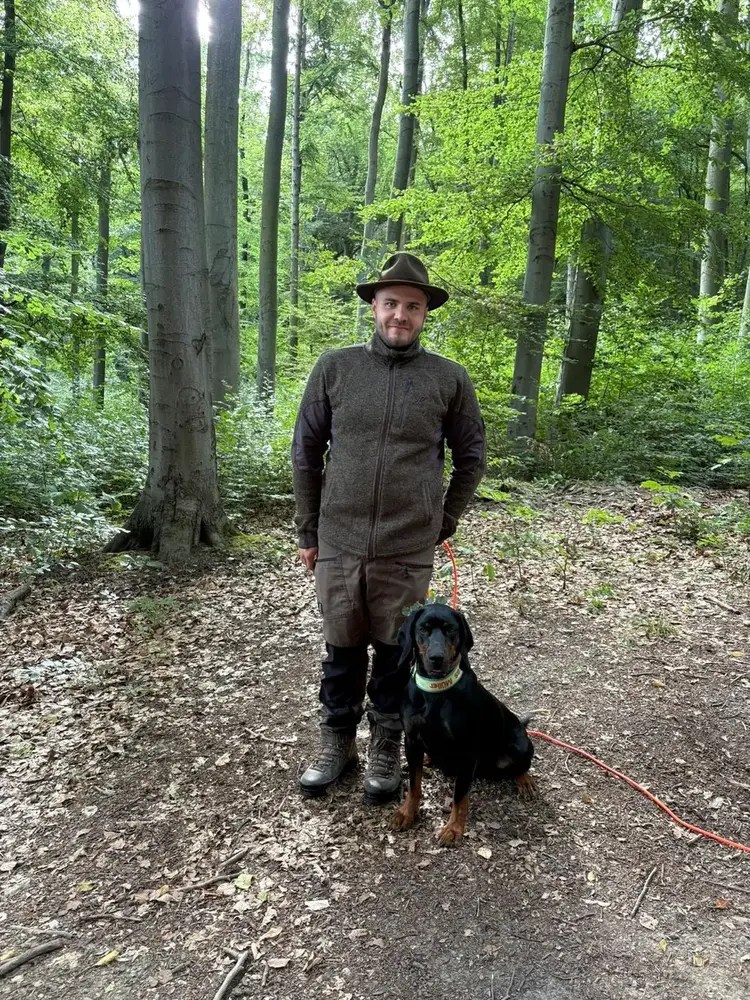
What I particularly love about my dogs is their sense of the situation. At home, they know our rules, are friendly with children and like nothing better than being with their people. They keep an attentive eye on the house and grounds. When hunting, they show their passion, willingness to work and independence. I especially value their level-headed behaviour. These observations describe my own dogs; every Gończy Polski develops through its individual temperament, upbringing and training. For me, family life, clear rules and suitable hunting work belong together. My article on life outside the hunting season gives a closer look at our routine.
Training: start early without asking too much
A bond, recall, attention to the handler and a settled daily routine are not things to begin shortly before the first hunt. Even so, I do not believe in overloading a young dog with training from the outset. Curiosity, confidence and natural abilities need room to develop.
“Let a young dog be a dog first.”
To me, that does not mean doing nothing. It means building foundations calmly, learning to read the dog and giving it opportunities to gain its own experience. I describe the path from coming home to the first working-test goals in my Gończy Polski training guide.
Is a Gończy Polski right for you?
You have a good starting point if you …
- want a true hunting dog and intend to make use of its natural abilities,
- enjoy scent work, training and working together in the hunting grounds,
- do not mistake independence for disobedience,
- can guide a dog calmly, consistently and fairly,
- make time for bonding, exercise and regular hunting work.
Think carefully if you …
- want as little hunting instinct as possible,
- are looking for a dog that always stays close at heel outdoors,
- would fundamentally struggle with a dog giving voice or working independently when hunting,
- cannot make time for training and meaningful activity,
- are choosing the Gończy mainly for its looks.
Not every Gończy is the same. Bloodline, upbringing, experience, training and individual character all matter greatly. That is why, when choosing pairings and later placing puppies, I look beyond the records to which dog and home truly suit each other.
More about the breed, working tests and breeding
Does the Gończy Polski suit your hunting life?
For me, getting to know a breed also means talking honestly about its needs. These three articles help you think more closely about the work you have in mind and about living together.
Hunting & work
Choosing a dog for driven hunts
Which dog suits your hunting? Consider the work, working style and training together.
Home & family
Hunting dogs and family life
Companionship, rest and clear rules: my approach to living with my dogs.
Getting started & training
Your first hunting dog
What new hunters should consider before choosing a dog – from daily care to working together.
I place my puppies exclusively with hunters and people training to become hunters. If you would like to work a Gończy Polski in hunting, my current litter plans show the status of the planned D litter.



Breeding Gończy Polski for hunting performance since 2019 – shaped by practical hunting experience, family life and a commitment to breeding healthy hunting dogs with sound temperaments.
Breeding within the VDH · Kennel name internationally protected through the FCI
© 2026 Gończy Polski vom Pauelsgraben

